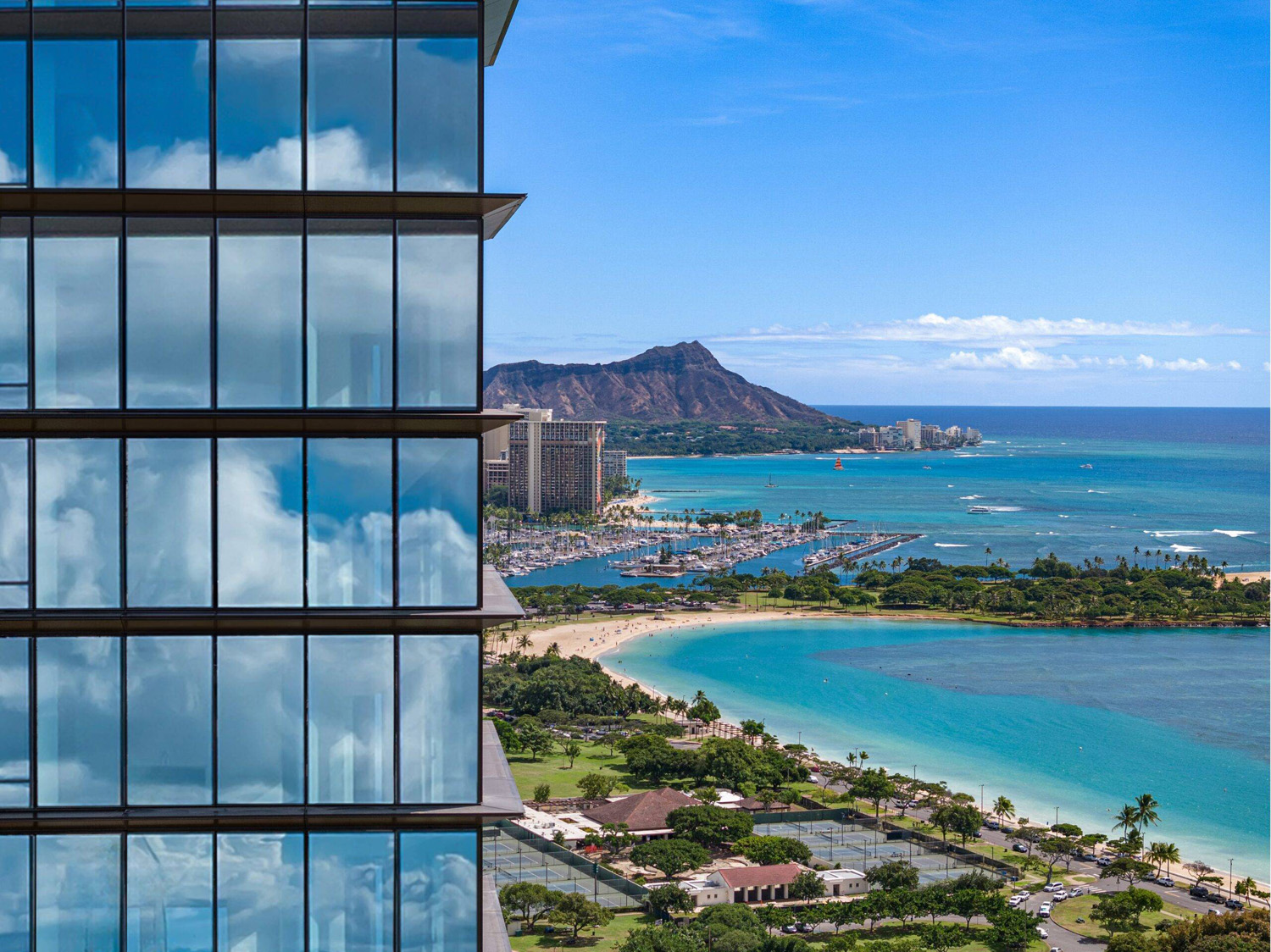
Honolulu luxury condos with strong long-term resale potential
When buyers ask which Honolulu condos have the strongest resale potential, the answer is rarely as simple as choosing the newest building or the one with the highest price per square foot.
A condominium’s resale appeal is shaped by a combination of factors: location, building reputation, scarcity, floor plan, views, privacy, amenities, maintenance, and how much competing inventory exists when you eventually decide to sell. The individual residence matters just as much as the building.
This is particularly true in Kakaʻako and Ala Moana, where buyers can choose between established luxury buildings, newer Ward Village towers, and a growing number of new developments. The market is active, but buyers have more options than they did during the most competitive years, which makes differentiation increasingly important.
The Kakaʻako market recorded 471 condo sales from September 2025 through August 2026, with a median sales price of $860,000 and a median 42 days on market. The overall market remains active, but those numbers include everything from smaller studios to ultra-luxury residences, so they do not tell you how a particular luxury building or residence will perform.
For resale, I would focus less on predicting the future and more on identifying the qualities that should continue to make a residence desirable.
Location still matters
The first factor I would look at is location within the neighborhood.
In Kakaʻako, being close to Victoria Ward Park, Ala Moana Beach Park, the ocean, shopping, dining, and everyday conveniences can contribute to long-term appeal. But even within Ward Village, location varies considerably from one building to another.
The distinction between first-row, second-row, and third-row buildings is a good example. Victoria Place, Kōʻula, and Aeʻo are all part of Ward Village, but their positions within the master plan are different, and buyers recognize that difference in pricing.
A first-row residence with a strong ocean or harbor outlook is competing in a different category from a residence farther inland. That does not mean the less expensive residence is a poor purchase. It means the resale audience and the pricing dynamics are different.
When I think about long-term resale, I want to know whether the location has an enduring reason for buyers to want to be there.
A protected view is different from a good view
Views are one of the most obvious drivers of condominium value in Hawaiʻi, but there is an important distinction between having a beautiful view today and having a view that is likely to remain desirable.
A residence overlooking the ocean, a park, or a protected open space can have a significant advantage over one looking directly toward a future development site.
This is one of the reasons I spend so much time looking beyond the individual listing. A buyer needs to understand what is around the building, what has already been approved, what is under construction, and how future development could affect the outlook.
A spectacular view that is likely to remain open can be a powerful resale advantage. A spectacular view that depends on an empty parcel remaining empty is a different proposition.
Scarcity creates its own advantage
Some residences are simply harder to replace.
A particular floor plan may only exist a handful of times within a building. A large corner residence may be rare. A high-floor unit with a specific combination of ocean, Diamond Head, harbor, and park views may have very limited competition.
That scarcity can matter when you eventually sell because a buyer cannot simply look at ten nearly identical alternatives and choose the cheapest one.
This is especially relevant at the luxury end of the market. A buyer purchasing a $3 million or $5 million residence is often looking for something specific rather than simply the most square footage for the money.
The more difficult a residence is to replicate, the more differentiated it can be.
Building reputation matters
The building itself becomes part of the resale story.
Buildings such as Waiea, Park Lane, Victoria Place, Anaha, and Hokua occupy established positions within Honolulu’s luxury condominium market, but they appeal to somewhat different buyers.
A building with strong architecture, thoughtful amenities, good management, desirable common areas, and a reputation for quality can continue to attract buyers even after newer projects come to market.
This is one reason I would not automatically assume that a newer building will outperform an established one. A well-maintained building with a strong identity can remain highly competitive for decades.
The luxury segment is different
Resale dynamics become even more nuanced as you move into the higher price ranges.
A luxury residence may take longer to sell simply because the pool of potential buyers is smaller. That does not necessarily indicate weakness. It can simply reflect the fact that there are fewer buyers looking for a particular type of property at a particular price.
Recent sales illustrate how thin the luxury market can be. A small number of transactions can move building-level medians considerably, so I would be cautious about drawing conclusions from a single sale or headline price.
For a luxury buyer, I would look at comparable sales over time, the quality and scarcity of the residence, current competing inventory, and how similar properties have performed rather than relying on one recent transaction.
Floor plan can be more important than square footage
When comparing condos, buyers often begin with price per square foot. It is useful, but it should not be the deciding factor.
A well-designed 1,200-square-foot residence can be considerably more desirable than a poorly configured 1,300-square-foot residence. The position of the kitchen, bedroom separation, storage, window placement, lanai, and living areas can all affect how a home feels.
For resale, I generally prefer floor plans that are intuitive and broadly appealing rather than highly specialized.
A residence that works well for a couple, a family, or a second-home buyer has a broader potential audience than one designed around a very specific lifestyle.
Parking matters more than buyers sometimes realize
In an urban condominium market, parking can be an important part of resale appeal.
A conveniently located deeded parking stall can make a meaningful difference, particularly in buildings where parking is limited or where the residence’s price point attracts buyers who expect secure, convenient parking.
The same applies to storage. A residence with practical storage can be easier to live in and easier to market when it eventually comes time to sell.
These details are not necessarily what attract someone to a listing initially, but they can influence the final decision when a buyer is comparing several similar homes.
Maintenance and building finances matter
Luxury buyers are not simply purchasing a beautiful residence. They are buying into a building.
That means the building’s financial health, maintenance history, reserves, insurance, capital projects, and management should all be considered.
A building can have spectacular amenities and still become less attractive if maintenance is poor, assessments are frequent, or ownership costs become difficult to justify relative to competing buildings.
Conversely, a well-managed building with strong reserves and consistently maintained common areas can support its reputation over time.
This is one area where an established building can actually have an advantage. You can evaluate its history rather than relying entirely on projections.
New construction is not automatically the best resale
New construction can command a premium, particularly when a building offers an exceptional location, architecture, amenities, or limited inventory.
But every new tower eventually becomes an established building.
When you buy new construction, you also need to consider what else will be delivered around it. A new building may have a beautiful outlook when you purchase it, only for future construction to change the surrounding skyline.
That does not mean buyers should avoid new construction. It means the long-term resale question should be part of the initial purchase decision.
I would rather buy a residence with a strong underlying reason to remain desirable than simply buy the newest available address.
Which Honolulu condos stand out?
There is no single list that will apply to every buyer, but several buildings in Kakaʻako and Ala Moana have characteristics that can support long-term resale appeal.
Victoria Place benefits from its first-row position, newer construction, extensive amenities, and relationship to the ocean, harbor, parks, and broader Ward Village community. The combination of location and luxury positioning gives it a strong point of differentiation.
Waiea has the advantage of established ultra-luxury positioning, larger residences, and a recognizable place within Ward Village. Its resale audience is more limited because of its price point, but the residences themselves can be difficult to replicate.
Park Lane occupies a particularly scarce position across from Ala Moana Beach Park, with a low-rise residential setting and direct access to Ala Moana Center. Its limited number of residences and distinctive format give it a very different resale story from a conventional high-rise.
Anaha has an established position within Ward Village and offers a combination of architecture, amenities, location, and a wide range of residence types. The individual stack is particularly important because the views and outlook can vary significantly.
Hokua remains relevant for buyers who value larger residences, established luxury, and its position directly across from Ala Moana Beach Park. Its age is not necessarily a disadvantage when the residence and building have been well maintained.
There are also compelling resale opportunities beyond these buildings. Sometimes an established building with a superior floor plan and protected view can make more sense than paying a substantial premium for a newer address.
What I would prioritize if resale matters
If resale potential is important to you, I would prioritize location, view protection, floor plan, scarcity, building quality, and total cost of ownership before focusing on finishes.
I would also pay close attention to how much competing inventory exists. If a building has dozens of nearly identical residences available at any given time, you may eventually be competing against several owners with essentially the same product.
A residence with a unique floor plan, desirable stack, strong view, good parking, and limited competition has a different resale position.
This is also where buying slightly differently from the obvious choice can sometimes pay off. The most expensive unit is not necessarily the one with the strongest resale characteristics. The goal is to identify what future buyers are likely to value and then avoid paying an unnecessary premium for features that are less durable.
What I would avoid
I would be cautious about buying solely because a building is new, because a listing has an impressive view in the marketing photos, or because a particular unit has the highest price per square foot in the building.
I would also be careful with highly specialized floor plans, residences with significant future view risk, buildings with unusually high or rapidly increasing ownership costs, and properties where the asking price is difficult to support with actual comparable sales.
Most importantly, I would avoid assuming that every luxury condo will appreciate simply because the neighborhood continues to develop.
Kakaʻako has strong long-term appeal, but individual buildings and residences can perform very differently.
The best resale property is often the one that is easiest to explain
When you eventually sell a luxury condominium, you want a buyer to immediately understand why the residence is special.
Maybe it is the protected ocean view. Maybe it is the rare corner floor plan. Maybe it is a first-row position, an unusually private lanai, a large residence in a building where most homes are smaller, or a combination of amenities and location that is difficult to replicate.
The strongest properties tend to have a clear story.
That is what I look for when evaluating a purchase. Not simply, “Is this a beautiful condo?” but “What will make the next buyer want this particular residence?”
The bottom line
There is no guaranteed formula for predicting which Honolulu condominium will appreciate the most. Markets change, new buildings are introduced, interest rates move, and individual buildings can experience very different levels of demand.
But you can make a more defensible purchase by focusing on the characteristics that tend to remain desirable: a strong location, a compelling and preferably protected view, a well-designed floor plan, limited competing inventory, quality building management, and a residence that is difficult to replicate.
For luxury buyers in Kakaʻako and Ala Moana, I would spend less time asking which building will “go up the most” and more time asking whether the residence has qualities that should continue to make it desirable five, ten, or fifteen years from now.
That is a much more useful way to think about resale potential.
If you’re considering buying a condo with resale in mind, I can help you compare not just the building and asking price, but the specific residence, its view corridor, competing inventory, building history, and the factors that could influence how it performs when you’re ready to sell.
Your Top Hawaiʻi Luxury Condo Specialist
Lucy Heath
Lucy Heath is a Real Estate Advisor at Compass and the founder of Luxury Condos Hawaiʻi, recognized for her expertise in refined condominium living in Kakaʻako and Ala Moana. She has lived in Ward Village for over six years, witnessing its transformation from the earliest stages of development into one of Honolulu's most sought-after neighborhoods.
Get in Touch